
Home & Garden
Budget Buster: Families Spend $3K a Year on Gas
New government estimates say families are spending nearly $3,000 a year just to fill up their gas tanks.


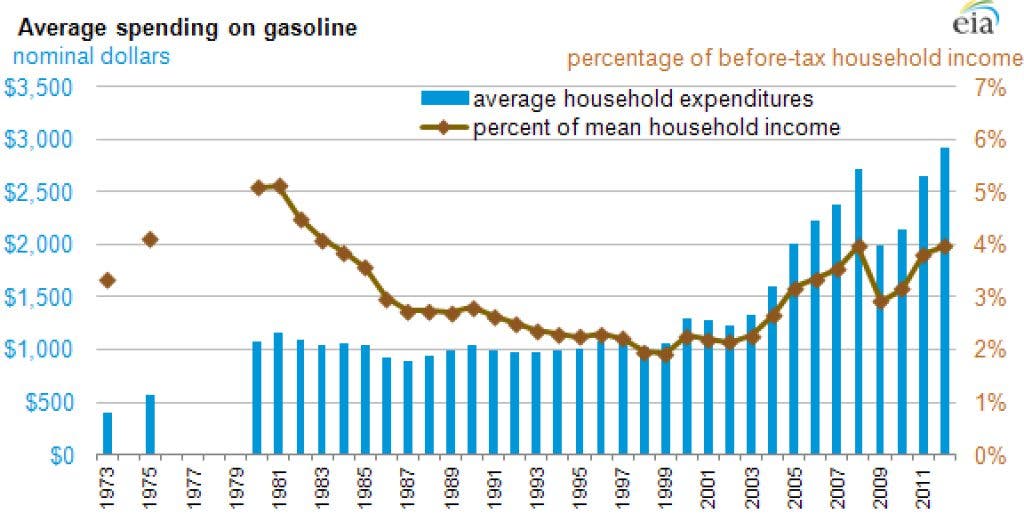
Families are devoting more of their money to gas these days than they have in most of the past 30 years, according to new estimates in a U.S. energy report.
The average American household spent $2,912—or about 4 percent of its gross income—on gas in 2012, according to estimates from the U.S. Energy Information Administration (EIA). This is a bigger drain on the family budget than at any time in the past three decades except 2008, when the gas grab was about the same.
What may be frustrating for some to hear is that while gas consumption has gone down in recent years, the budget burden has only gotten worse as gas prices have increased.
Find out what's happening in Redlands-Loma Lindawith free, real-time updates from Patch.
Back in the early 1980s, families were spending more than 5 percent of their income on gas but traveling much less than we do today. Since then, fuel efficiency has increased significantly, making it cost less per mile for us to get where we're going. However, while U.S. gas consumption was at its lowest level in 10 years in 2011, average gas prices increased that year by 26.1 percent and then again by 3.3 percent last year, according to the EIA.
Tell us: How much is your family spending on gas? What do you do to save money?
Find out what's happening in Redlands-Loma Lindawith free, real-time updates from Patch.
Get more local news delivered straight to your inbox. Sign up for free Patch newsletters and alerts.


