Politics & Government
Supreme Court Delays Decision on Gay Marriage
The U.S. Supreme Court may consider the 10 same-sex marriage cases Monday, national media is reporting.


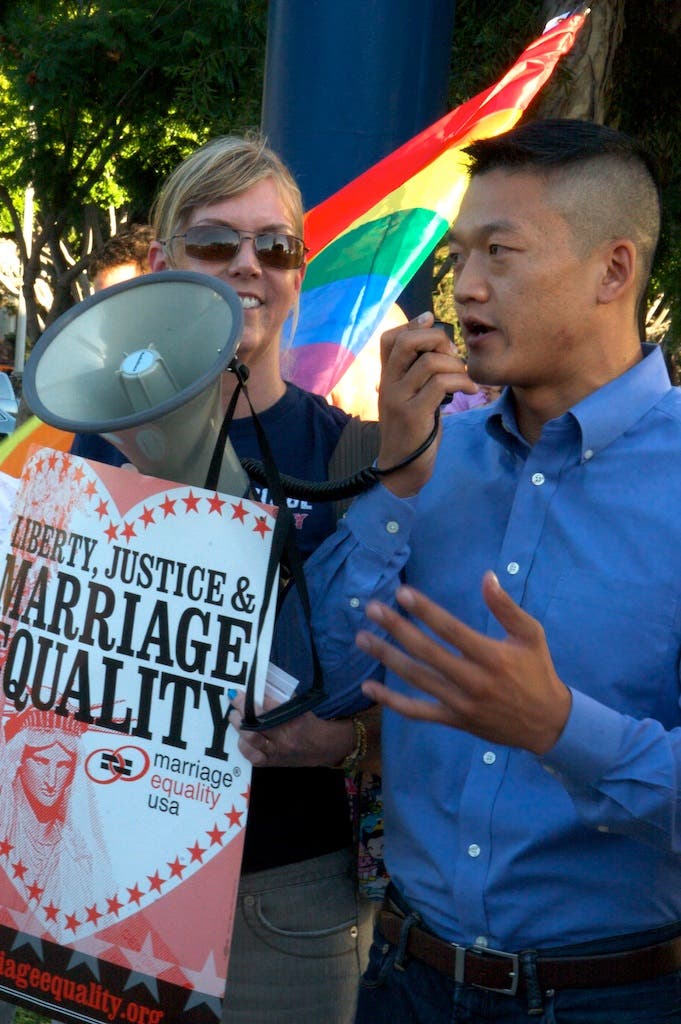


The Supreme Court will not act on gay marriage, the Wall Street Journal and numerous sources on Twitter are reporting.
After much anticipation, court deferred 10 cases related to same-sex marriage Friday.
The Atlantic shared this update on its website, The Wire:
Find out what's happening in Redlands-Loma Lindawith free, real-time updates from Patch.
"The Supreme Court, after taking most of the day to prepare new orders, took no action Friday on the ten same-sex marriage cases now on the docket," reports the SCOTUS blog's Lyle Denniston
But the issue is not dead. The court could next issue orders at 9:30 a.m. Monday.
Find out what's happening in Redlands-Loma Lindawith free, real-time updates from Patch.
-----
The future of same-sex unions in California could be decided Friday, if the U.S. Supreme Court decides to take up Prop. 8, the ban on gay marriage that voters approved in California four years ago.
The 9th Circuit Court of Appeals struck down Prop. 8 in February, ruling the law unconstitutional. Prop. 8 supporters then appealed to the country's highest court.
The Los Angeles Times gave this concise summary of Friday's possible outcomes:
If the justices opt not to hear the Proposition 8 case, then a federal appeals court ruling that found the 2008 state ballot measure banning same-sex marriage unconstitutional would stand, clearing the way for marriages to begin. If the justices take up the case, a ruling would not come until next year and gay marriage would remain on hold until then, or longer depending on how the court rules.
Prop. 8 passed with 52 percent of the vote in 2008. Since then, nine states have approved same-sex marriage.
This chronology of the history of gay marriage on the LA Times explains the complex road that has led to today.
Supporters of gay marriage hailed February's favorable appellate court ruling. In its decision, the court stated that banning same-sex marriage "serves no purpose, and has no effect, other than to lessen the status and human dignity of gays and lesbians in California and to officially reclassify their relationship and families as inferior to those of opposite-sex couples."
Prop. 8 is one of several same-sex marriage cases that the US Supreme Court could choose to hear. Most of the others challenge the constitutionality of the Defense of Marriage Act.
For all of the cases, the court's decision to not hear arguments would actually do more than putting them on the agenda for next term. Read about those impacts here.
What are your thoughts? Should the appellate court ruling stand and same-sex marriage be allowed? Or was Prop. 8 the right decision to begin with? Tell us in the comment section below.
Get more local news delivered straight to your inbox. Sign up for free Patch newsletters and alerts.